The Life and Journey of Hamid Murtada Khalafallah
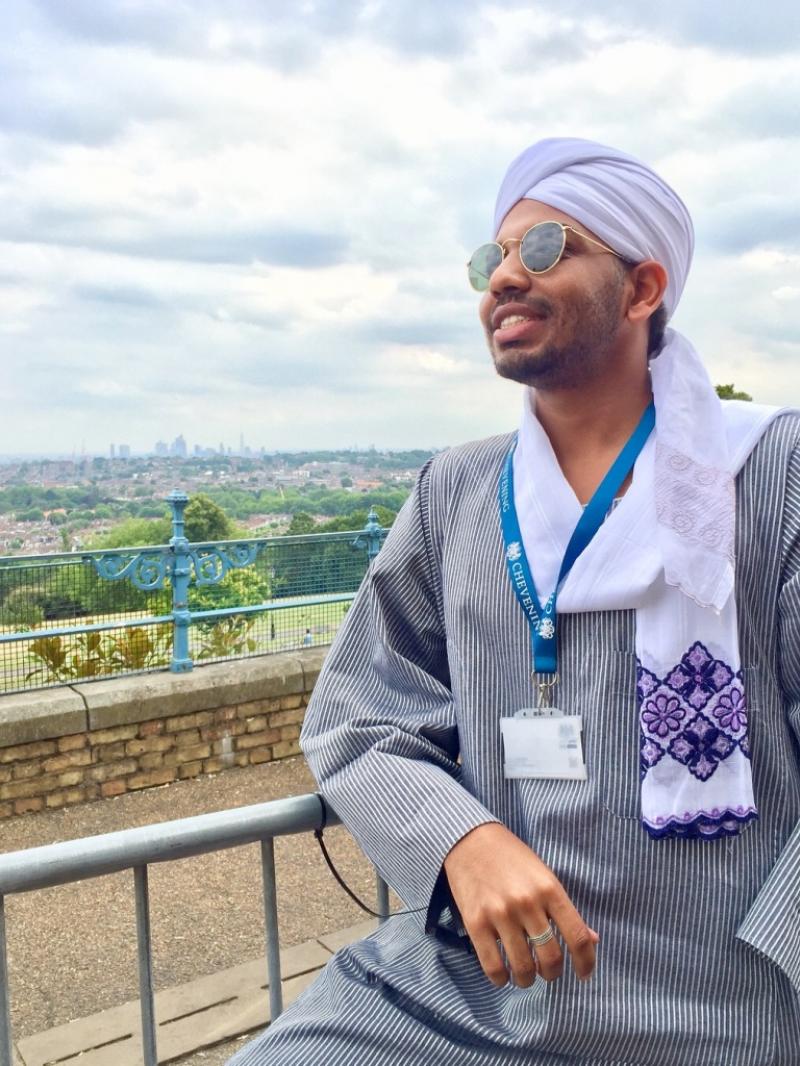
Hamid Murtada Khalafallah (1990-2026) was a highly motivated development practitioner, researcher, and policy analyst whose work bridged academic scholarship and practical policy implementation. Coming from a multidisciplinary background with qualifications in International Development, Governance, and Engineering, Hamid demonstrated exceptional experience in research, policy analysis, and programme management across international and national organizations.
Born in 1990 in Sudan, Hamid witnessed firsthand the struggles and aspirations of the Sudanese people—experiences that shaped his unwavering commitment to democracy and justice. Despite the pain and hardships his homeland caused him, including displacement, political turmoil, and personal loss, Hamid never wavered in his love for Sudan. As he poignantly wrote in the dedication to his master's dissertation, Sudan was "the land in which most my life's pain and hardships originated, yet the ultimate source of my pride, hope and happiness."
His areas of expertise included governance, public policy, democratization, development management, and citizen-state engagement. Through his scholarly work, policy analysis, and on-the-ground experience, Hamid became a leading voice on Sudan's democratic transition and grassroots movements in Africa.
Academic Journey
PhD in Development Studies (Development Policy and Management)
Global Development Institute, University of Manchester, United Kingdom
Provisional research title: Political Transitions in Africa: The Quest for Democratic Governance, and the Role of Grassroots Movements in Sudan
Member of the Politics, Governance and Management (State-Society Relations) research group. Served as Postgraduate Researchers (PGRs) and Early Career Researchers (ECRs) Representative at the Development Studies Association (DSA), and as Equality, Diversity and Inclusion (EDI) Representative for the North West Social Studies Doctoral Training Programme (NWSSDTP).
Served as Teaching Assistant at the Global Development Institute (2024-2026) and Research Assistant at the London School of Economics (September-December 2024).
Residential Fellowship in Transnational Governance
School of Transnational Governance, European University Institute, Florence, Italy
Young African Leaders Programme (September-December 2021)
Master of Arts in International Development Management (Distinction)
University of Bradford, United Kingdom | Chevening Scholar
Winner of the 2019 UK Development Studies Association (DSA) Best Master's Dissertation Award for his research on "The role of development NGOs in the context of authoritarian regimes: A case study of Sudan"
The judges commended his dissertation for its "very good analysis of the complex picture of different actors and their motives" and praised how it was "carefully researched, including with primary sources."
Modules: Issues in Development Theory, Organisations and Capacity Enhancement, Project Planning and Management, Issues in Development Policy, Public Policy Analysis
Bachelor of Science - Electrical, Electronics and Communications Engineering (Honours Degree)
Sudan University of Science and Technology
Professional Experience and Leadership
Instructor and Supervisor
Sudan Democracy Lifeline Fellowship Programme
Taught and supervised fellows in the Sudan Democracy Lifeline Fellowship Programme, providing instruction on public policy and research writing. Mentored emerging Sudanese researchers and activists committed to democratic transition and governance in Sudan.
Fellow, Now Generation Network (NGN)
Mo Ibrahim Foundation
Selected as a Fellow of the Mo Ibrahim Foundation's Now Generation Network, an invite-only coalition of young and mid-career African practitioners and advocates committed to advancing governance and development across the continent. The NGN brings together Ibrahim alums, Fellows, scholars, and regional experts from all 54 African countries, representing various sectors and disciplines with expertise ranging from climate change to innovative finance.
Evaluation Consultant
Sudan Democracy Lifeline Fellowship Programme
Served as an evaluation consultant for the Sudan Democracy Lifeline Fellowship Programme, assessing programme effectiveness and impact in developing the next generation of Sudanese democracy advocates and researchers.
Nonresident Fellow
The Tahrir Institute for Middle East Policy (TIMEP)
TIMEP's Non-resident Fellowship programme carved out a space for and invested in individuals whose work advanced transparent, accountable, and just societies. The main mandate for the fellowship focused on participatory and inclusive governance and mobilization in Sudan, using a multiplicity of tools including producing solutions-oriented analysis papers and policy briefs, as well as various advocacy activities.
Programme Officer - Constitution Building Programme
International IDEA, Khartoum, Sudan
Worked on an EU-funded programme in support of Sudan's democratic transition, with a focus on the constitution-building process. Directly engaged with constitutional development and democratic institution-building efforts during a critical period in Sudan's political evolution.
Senior Manager, Policy and Research
British Council, Khartoum, Sudan
Worked on a large-scale governance reform programme (FCDO-funded), focusing on: policy and advocacy; research and analysis; external relations and partnership development; and monitoring, evaluation and learning.
Research and Analysis Manager
British Council, Khartoum, Sudan
Worked closely with the Senior Governance Advisor in support of a Macro-Governance Reform Programme (FCDO funded), undertaking research, data collection and analysis for intervention design and delivery. Supported programme management team in converting research insights into practical and coherent programmes of action. Developed and maintained relationships with key stakeholders including civil society organisations, private sector, government actors, media and academia.
Education Projects Manager
British Council, Khartoum, Sudan
Responsible for the delivery of three global education projects in Sudan (Connecting Classrooms, World Voice and Rivers of the World), with an annual budget of 300K GBP. Managed relationships with governmental entities, NGOs, and private sector, as well as regional and global project teams. Led project team including two project coordinators and temporary project assistants, overseeing project finances and procurement.
Project Manager
Huawei, Khartoum, Sudan
Responsible for all aspects of three projects worth $15 million in revenue to build network telecom infrastructure; from initiation, planning, implementation, monitoring and evaluation. Managed and motivated project team, winning the General Manager Award in 2015 and 2016 for leading the highest performing project team. Achieved 97% customer satisfaction in 2016.
Volunteer Work and Community Service
Trustee and Director of Resources
Nile Swimmers
Member of the UK Board of Trustees, in charge of organizational finances, budget creation, project management and monitoring. Took part in leading a drowning prevention project funded by UNICEF in 2016, training vulnerable children in South Sudanese refugee camps in White Nile State to be safer around water. Represented the organization in meetings in Sudan with NGOs, embassies, governmental bodies, corporates and other partners.
Community Development Officer
Sudan Scouts Association
Responsible for the monitoring and evaluation of 6 community development projects implemented by the Sudanese Scouts Association, involving hundreds of scouts across Sudan. Created partnerships with national and international NGOs, government and private sector.
Co-Founder and Administrator
To Sudan With Love
In charge of planning, managing and hands-on implementation of the charity's projects, volunteer management, alongside other management team members.
Areas of Expertise
Hamid's research and policy work spanned multiple interconnected areas:
- Governance and Democratic Transitions: How authoritarian systems evolve and how democratic institutions can be built amid repressive conditions
- Grassroots Movements: The role of civil society, resistance committees, and community organizations in political change
- Citizen-State Engagement: Mechanisms for meaningful participation and accountability in development and governance
- Development Policy: The complex relationship between development interventions and political contexts in authoritarian settings
- Conflict and Peacebuilding: Analysis of Sudan's civil war, mediation efforts, and pathways to sustainable peace
- Security and Democracy: Challenging the false dichotomy between security and democratic governance
Scholarly Contributions and Impact
Hamid's scholarly work was characterized by several distinctive features that set him apart as a researcher:
- Centering Sudanese Voices: He consistently elevated the perspectives and experiences of ordinary Sudanese citizens, grassroots activists, and civil society organizations in his analysis
- Bridging Theory and Practice: His work moved fluidly between academic scholarship and practical policy recommendations, making his research actionable
- Rigorous Primary Research: He conducted extensive interviews, analyzed political charters and documents, and maintained close connections to developments on the ground
- Critical International Engagement: He held international actors accountable for their roles in Sudan's political crises while offering constructive pathways forward
- Timeliness and Relevance: His prolific writing responded to rapidly evolving events while maintaining analytical depth
Public Intellectual and Commentator
Beyond academic publications, Hamid was a sought-after commentator on Sudanese affairs. He appeared on CNN with Christiane Amanpour and Bianna Golodryga, participated in numerous podcasts and webinars, and spoke at conferences and panel discussions across Europe, North America, and Africa.
His ability to communicate complex political dynamics in accessible language made him an invaluable resource for journalists, policymakers, and general audiences seeking to understand Sudan's challenges and possibilities.
Personal Commitment to Sudan
While Hamid's academic credentials and publications were impressive, those who knew him recognized that his work came from a place of deep personal commitment. He was not a detached observer but someone whose own life had been shaped by Sudan's struggles.
He worked with civil resistance groups in Sudan, promoting democracy and advocating for human rights even as conditions became increasingly dangerous. When war broke out in April 2023, he continued documenting atrocities, analyzing conflict dynamics, and calling for accountability—all while dealing with the personal toll of seeing his homeland devastated.
"People in Sudan are always asked to tone down their aspirations for democracy and to focus on security."
— Hamid Khalafallah, refusing to accept false choices between dignity and survival
Enduring Legacy
Though Hamid's life was tragically cut short, his impact endures through:
- His extensive body of published research and analysis on Sudan
- The students and young researchers he mentored and inspired
- The frameworks he developed for understanding grassroots movements and democratic transitions
- His insistence that Sudanese voices must lead any conversation about Sudan's future
- His demonstration that rigorous scholarship and passionate advocacy can coexist
- His refusal to accept that people must choose between security and dignity
For everyone committed to democracy, justice, and human dignity in Sudan and beyond, Hamid Khalafallah's life and work remain a source of inspiration and guidance.
To my beloved Sudan,
— Hamid Khalafallah, 2019
The land in which most my life's pain and hardships originated,
yet the ultimate source of my pride, hope and happiness.