Selected Publications
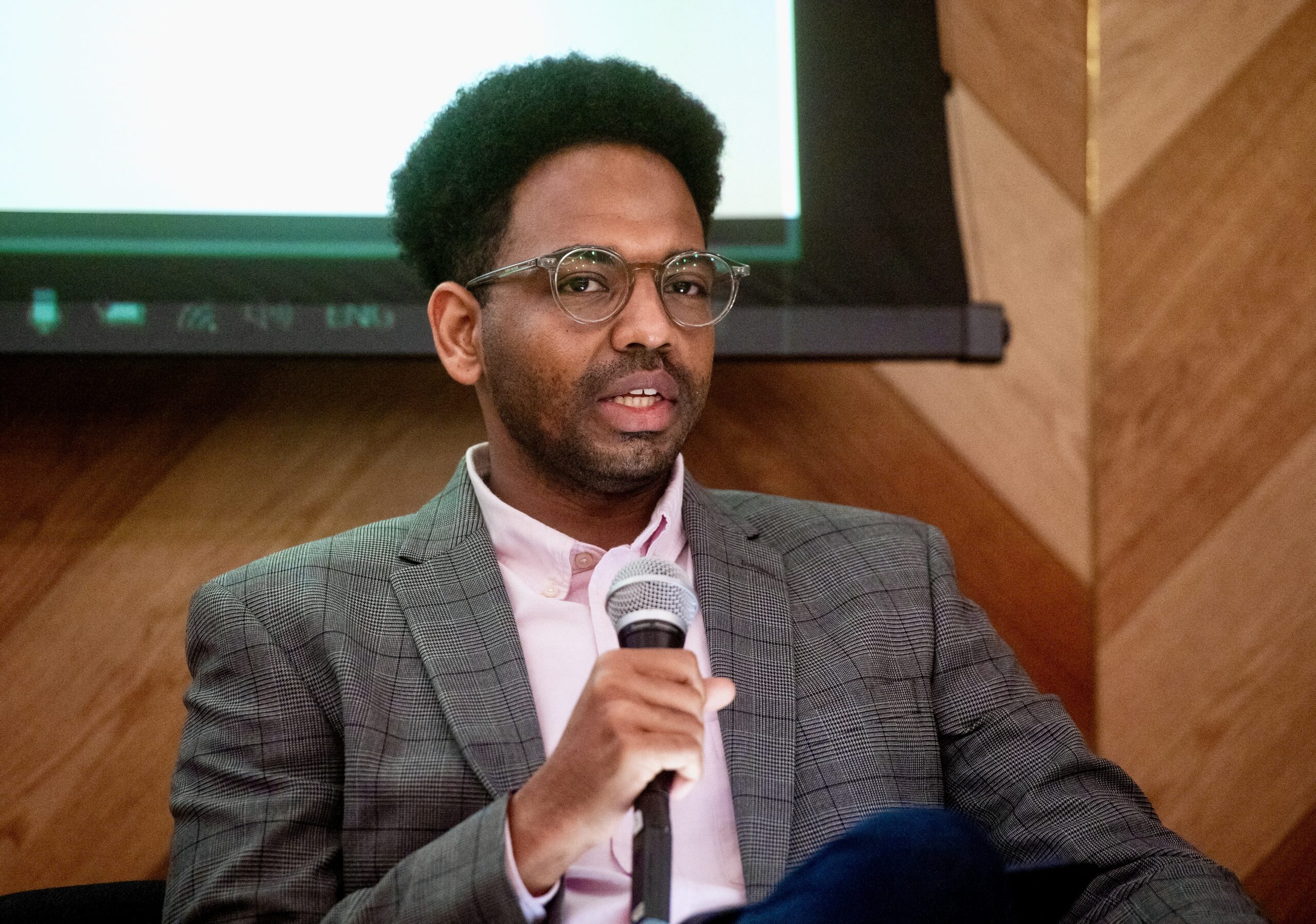
Hamid Khalafallah was a rising scholar whose research and analysis shaped understanding of Sudan's democratic transition, grassroots movements, and ongoing conflict. His work appeared in policy publications and media outlets, always centering Sudanese voices and challenging conventional wisdom about the relationship between security and democracy.
This selected bibliography includes Hamid's publications, organized in descending chronological order. Each entry includes a brief summary and link to the original publication.
2025
Youth Protests and Political Imaginaries: Insights from Nigeria, Senegal, and Sudan
This article advances understandings of how social media was used both as a space and as a catalyst of political mobilisation by youth-led movements in Africa to advance their democratic demands. It examines youth-led movements in three countries: the Sudan protests from 2018 to 2019, the #EndSARS protests in Nigeria in 2020, and the #FreeSenegal protests spanning 2021 to 2024. These movements highlighted significant concerns regarding governance, economic disparity, human rights, and democracy. While African youth continue to be sidelined from formal politics, their online protests and street protests did not just counter autocratic tendencies by the state but also reflected their political imaginaries.
View on Google Scholar →The Civilian Façade in Sudan's War: Rival Governments and the Battle for Legitimacy
This article examines how both the Sudanese Armed Forces (SAF) and the Rapid Support Forces (RSF) established parallel civilian governments in 2025, marking a shift toward fighting for political dominance as the war escalates and governance fractures. It discusses SAF's "Hope Government" led by Kamil Idris and the RSF-backed "Government of Peace and Unity" led by Mohamed Hassan al-Taishi.
Read Publication →Sudan's Counterrevolutionary War: The Systematic Targeting of Pro-Democracy Activists
This piece examines the systematic targeting of pro-democracy activists in Sudan by both warring military factions. It highlights how the conflict has evolved into a counterrevolutionary war aimed at suppressing civilian democratic aspirations and silencing voices advocating for democratic governance.
Read Publication →Two Years of War in Sudan: A Fractured Nation on the Brink of Partition
This article examines how Sudan's war shows no signs of resolution, with both sides pushing to establish rival governments while civilians bear the brunt of the violence. It discusses how what began as a power struggle between military factions has evolved into a multifaceted counterrevolutionary war with significant proxy dimensions and profound humanitarian and geopolitical implications.
Read Publication →Beyond the Battlefield: Sudan's Virtual Propaganda Warzone
This article analyzes how the RSF and SAF fight to control the narrative on social media, where misinformation and disinformation have erupted, endangering the lives of civilians and dangerously altering public opinion. It argues that countering these propaganda campaigns is crucial and must be an integral part of initiatives aiming to end the war in Sudan.
Read Publication →2024
Breaking the Cycle: Can Geneva Succeed Where Jeddah Failed in Sudan?
This piece examines peace talks in Geneva co-hosted by Switzerland and Saudi Arabia starting August 14, 2024, which invited SAF and RSF to new negotiations. It discusses how international peace efforts in Sudan's war have largely failed to make an impact and frames the Geneva talks as a vital opportunity to shift the mediation strategy and secure a lasting ceasefire.
Read Publication →Grassroots Aid Networks Are a Lifeline Amid Sudan's Humanitarian Catastrophe
This article highlights the critical role of grassroots civilian organizations and aid networks in Sudan during the humanitarian crisis. It advocates that mediators should include grassroots civilian groups who have greater legitimacy on the ground as they continue to support people caught in the crossfire.
Read Publication →One Year of the Calamitous War in Sudan – A Personal Reflection
This personal reflection marks the one-year anniversary of the Sudan war, reflecting on the impact of displacement and the broader effects on the country's people. It provides first-hand insights into the lived experiences of Sudanese civilians during the conflict.
Read Publication →Out of Sight, Out of Mind: How Sudan Faded from the Headlines and Public Concern
This article discusses how the armed conflict in Sudan continues with no end in sight while millions endure devastating impacts. It examines how the lack of international media reporting means the conflict remains missing from global consciousness and the international agenda despite escalating human suffering.
Read Publication →War, Displacement, and Sudan's Democracy Movement: The Impact of Forced Migration and Displacement on the Movement
This research paper explores the impact of forced migration and displacement on Sudan's democracy movement. Khalafallah presented this research at an AMEL webinar titled "Elevating Sudanese Voices in the International Community" alongside researcher Reem Abbas.
Read Publication →2023
Civilian Voices Are Critical to Securing Real Peace in Sudan
This article discusses how the war in Sudan was approaching the three-month mark with no signs of progress in ending the fighting between Sudan's army and the Rapid Support Forces. It emphasizes that Sudanese grassroots movements, civil society organizations, trade unions, and political parties should have a bigger voice in peace negotiations.
Read Publication →Sudan's Generals' Rivalry and Its Transnational Dimensions
This analysis examines the violent clashes that erupted on April 15, 2023, between Sudan's Armed Forces (SAF) General Abdel-fattah al-Burhan and the paramilitary Rapid Support Forces (RSF) commander General Mohamed Hamdan Dagalo (Hemedti). The article analyzes how tensions between the two generals escalated into full-scale warfare, the unfolding humanitarian crisis with hundreds killed and thousands injured, and the transnational dimensions of the conflict. It explores various regional and international interests at stake and the concern that these violent clashes could develop into a full-blown civil war spreading across the entire region. The piece also examines failed mediation attempts and ceasefires that were not honored by both parties.
Read Publication →Only Leverage, Not International Pleas, Can End Sudan's War
This piece examines foreign governments' and international entities' long history of mediating in Sudanese crises. It argues that foreign mediation since 2019 contributed to the violent escalation between the Sudanese army and the RSF, and calls for more effective use of leverage rather than mere appeals.
Read Publication →Security Over Democracy: The Compromising of Sudan's Transition
This article argues that "the events that have taken place in Sudan since 2019 prove that democracy and security cannot be thought of separately." It examines how prioritizing security concerns over democratic aspirations has compromised Sudan's democratic transition.
Read Publication →Efforts Towards Restoring Constitutional Order and Democratic Transition in Sudan
Originally published as a feature piece in Issue 1 of TIMEP's Rule of Law Developments in the Middle East and North Africa newsletter, this article examines efforts to restore constitutional order and democratic transition in Sudan following the military coup.
Read Publication →Sudan's Post-Coup Crisis: From a Political Impasse to an Unpopular Political Process
This article discusses how Sudan experienced long political stagnation after the military launched a coup d'état in October 2021. It analyzes the signing of the political framework agreement in December 2022, which succeeded in breaking the post-coup political stalemate but failed in building popular support.
Read Publication →2022
Building Democratic Institutions in Sudan Amid Authoritarian Rule
This article examines the challenges and efforts to build democratic institutions in Sudan while operating under authoritarian military rule following the October 2021 coup.
Read Publication →Sudan Resistance Committee Draft Charters: Where They Stand, and Where They Are Heading
This analysis by Khalafallah and Brooke Davies examines the areas of convergence and divergence between the different resistance committees' charters in Sudan. It raises the most important structural concerns and features set out in the charters, evaluating what differences must be reconciled if resistance committees are to present a united vision in negotiations with Sudan's military component.
Read Publication →The Stumbling Mediation Initiatives in the Post-Coup Sudan
This article discusses the various mediation efforts following Sudan's October 2021 military coup, including the failed pact between General al-Burhan and Prime Minister Hamdok, UNITAMS consultations, and the establishment of a tripartite mediation mechanism involving UNITAMS, the African Union, and IGAD.
Read Publication →Navigating a Participatory Political Process in Sudan Amid a Military Coup
This article analyzes political charters developed by resistance committees and investigates the process that led to the production of two key political charters, which elevated and decentralized the political discourse across Sudan.
Read Publication →The Implications of Governments' Responses to the COVID-19 Crisis: A Wake-up Call to Revisiting a Broken Social Contract and Weak Institutional Capability
This research paper examines how the COVID-19 pandemic exposed a globally dilapidated health system and highlighted the dichotomy between principals and agents across sovereign states. Through case studies of Italy and Sudan, the paper assesses institutional responses to the COVID-19 crisis, their effects on principal-agent relations, and how the vacuums presented by the crisis led to tectonic shifts in the social contract. The research investigates the role of multilateral interventions and explores how the pandemic created opportunities to restore broken social contracts, improve state-constituent trust, and address weak institutional capability in both Global North and Global South contexts.
Read Publication (Page 278) →2021
The 'Neighbourhood Committees' of Sudan: The Role of an Emerging Civil Society Player in Responding to a Health Crisis
This paper examines how Neighbourhood Committees (NCs) in Sudan, which emerged during the 2019 popular uprising, played a crucial role in responding to the COVID-19 crisis. Despite lacking previous experience in service provision, these grassroots committees stepped up to support vulnerable citizens during a time when the transitional government faced immense challenges. The research explores how NCs formed links between COVID-19 intervention providers and local communities, customized prevention methods to fit diverse local contexts, and mobilized local and national actors to ease the negative effects of preventive lockdown measures in the context of a collapsing health system and flawed social protection networks.
View Conference Paper →2019
The Role of Development NGOs in the Context of Authoritarian Regimes: A Case Study of Sudan
This award-winning dissertation examines the role of development NGOs operating in Sudan under authoritarian rule and provides recommendations for NGOs to improve their performance and build beneficial relationships with their counterparts. The judges praised it for its "very good analysis of the complex picture of different actors and their motives" and noted it was "carefully researched, including with primary sources."
Read Publication →Development NGOs and Authoritarian Regimes: The Story of Sudan
Hamid presented his award-winning dissertation research at the DSA 2019 annual conference. This presentation examined NGO-state relationships in Sudan under authoritarian rule, exploring how development NGOs operate in one of the toughest environments for civil society organizations and their considerable role despite regime strictness and challenging circumstances.
View Conference Presentation →2012
A Sudanese Summer: The Sudan Revolts One Month On
This article, co-authored by Hamid Khalafallah as part of the SudanRevolts collective, examines the 2012 Sudan protests and revolts that emerged in response to austerity measures. Written during the period of demonstrations that began as part of the broader regional protest movements, the piece provides on-the-ground analysis of the grassroots activism and social movements challenging authoritarian rule in Sudan.
Read Publication →Scholarly Profiles & Citations
Google Scholar Profile
Hamid's Google Scholar profile provides a complete record of his academic publications, citations, and research impact. His work has been cited by scholars globally, reflecting the influence of his research on Sudan's democratic transitions, grassroots movements, and political development.
View Google Scholar Profile →Interviews & Panel Discussions
Sudan in Conflict: The Impact of Failed International Policy and the Way Forward
This panel discussion, moderated by Magdi Amin with panelists including Khalafallah, Reem Abbas, Awadallah Hussein, and Muzna Al-Haj, explored Sudan's ongoing conflict, the role of the international community, and how global actors can change the course of action on the ground. It examined international engagement around the violence in Sudan and lessons for future support efforts.
Read More →"People in Sudan Are Always Asked to Tone Down Their Aspirations for Democracy and to Focus on Security"
In this interview, Khalafallah discusses the crisis in Sudan, international actors' roles in Sudan's political situation, and media coverage of the conflict. The interview is also available in video format on YouTube.
Read Interview →Jadaliyya Connections Podcast Episode 64: Sudan Update with Hamid Khalafallah and Kholood Khair
Khalafallah and Kholoud Khair joined Jadaliyya co-editor Mouin Rabbani for a conversation about the ongoing civil war in Sudan. The discussion examines the current situation in Sudan and the impact of the ongoing civil conflict.
Listen to Podcast →Assessing the Origins, Dynamics, and Future of Conflict in Sudan
In this podcast episode, Khalafallah and co-authors Laura Nyantung Beny, Nisrin Elamin, Matiangai Sirleaf, Paras Shah, and Clara Apt discuss the conflict that erupted in April 2023 between the Sudanese Armed Forces and the Rapid Support Forces. They explore the conflict's origins, impact on civilians, and the failures of international response to address the severe humanitarian crisis.
Listen to Podcast →The International Risk Podcast: Sudan's Civil War and Fragmented Governance
Khalafallah and host Dominic Bowen unpacked how Sudan's civil war has reshaped authority, militarized elite bargaining, and fragmented governance across the country. They discuss why shifting territorial control does not equate to state consolidation.
Listen to Podcast →Memorial & Tributes
Selective Outrage Is Not Neutral - In Memory of Hamid Khalafallah
A memorial tribute published by the Global Development Institute at the University of Manchester following Hamid's passing. The piece reflects on his life, scholarship, and the principles he stood for.
Read Tribute →Google Scholar Profile
For citations and additional academic information, visit Hamid's Google Scholar profile:
View Google Scholar Profile →